
Charter Choices: Understanding Bareboat and Time Charters
Why Understanding Charter Types Matters for Your Perfect Voyage
Bareboat charter vs time charter represents a fundamental choice in maritime leasing: do you want complete control of the vessel, or do you prefer a fully crewed experience? This decision affects everything from your responsibilities and costs to the level of expertise required and the risks you’ll assume.
Here’s the core difference at a glance:
| Charter Type | Who Controls the Vessel | Who Provides the Crew | Who Handles Maintenance | Best For |
|---|---|---|---|---|
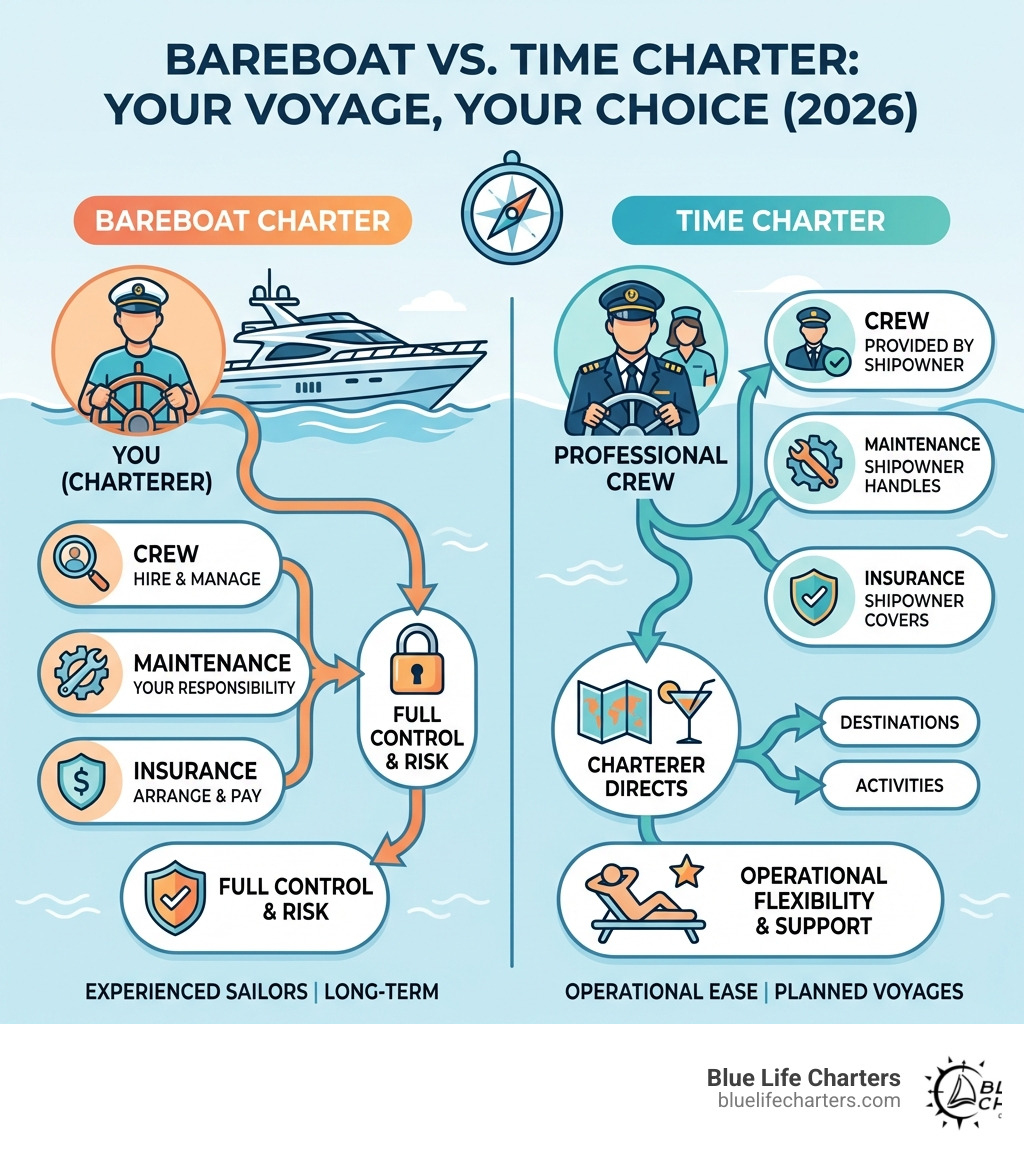
| Bareboat Charter | You (the charterer) | You hire and manage the crew | You handle all maintenance and operational costs | Experienced sailors wanting full control and long-term use |
| Time Charter | Shipowner provides crew; you direct operations | Shipowner provides captain and crew | Shipowner handles maintenance and repairs | Those seeking operational flexibility with professional crew support |
In the maritime world, a charter party agreement is essentially a lease for a vessel. The two most common types—bareboat and time charters—differ dramatically in how responsibilities and risks are divided between the shipowner and the charterer.
With a bareboat charter (also called a demise charter), you’re taking possession of an empty vessel. You become responsible for everything: hiring the crew, maintaining the vessel, arranging insurance, and covering all operational costs. It’s like leasing a car without a driver—you’re in complete command.
A time charter works differently. The shipowner provides a fully crewed vessel for a fixed period, and you gain control over its commercial operations—where it goes and what cargo it carries (or in the case of luxury charters, which destinations you visit). The shipowner still handles maintenance, crew wages, and vessel repairs, while you cover fuel, port charges, and other voyage-specific expenses.
According to industry data, time charters account for approximately 40% of all charter agreements, with 55% of charterers preferring them for logistic planning and financial predictability. This popularity stems from the balance they strike between operational control and reduced responsibility.
Understanding these distinctions is crucial whether you’re planning a private luxury vacation in Charleston’s waters or considering longer-term maritime arrangements. The choice between bareboat and time charters fundamentally shapes your experience, costs, and peace of mind on the water.
The Bareboat Charter: Taking Full Command of the Vessel
Imagine having the keys to a magnificent yacht in Charleston, ready to explore the Lowcountry at your own pace, with you as the captain. That’s the essence of a bareboat charter. In this arrangement, the shipowner provides you, the charterer, with a vessel—often referred to as a “demise charter”—that is essentially “bare.” This means it comes without a crew, fuel, or provisions. You receive a seaworthy vessel, but from that moment on, you assume nearly all the responsibilities of an owner.
This type of arrangement grants the charterer complete control and responsibility over the vessel. When you enter into a bareboat charter, you gain legal possession of the yacht for the charter duration, effectively becoming the “disponent owner.” This means you are responsible for everything from crewing and navigation to maintenance, insurance, and all operational costs. It’s an immersive experience for those who love to be in charge and have the necessary skills and certifications to operate a vessel independently. We offer fantastic options for those looking for a Bareboat Yacht Charter in Charleston, SC.
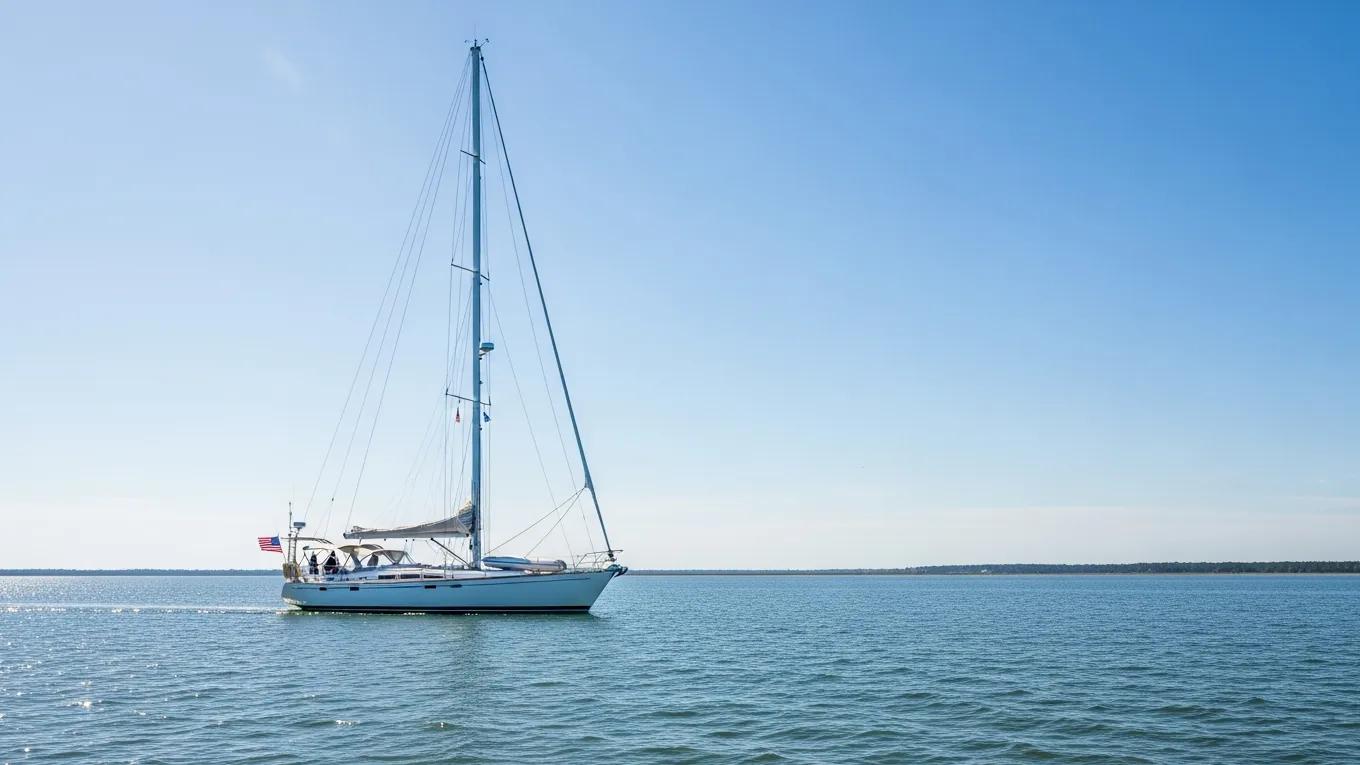
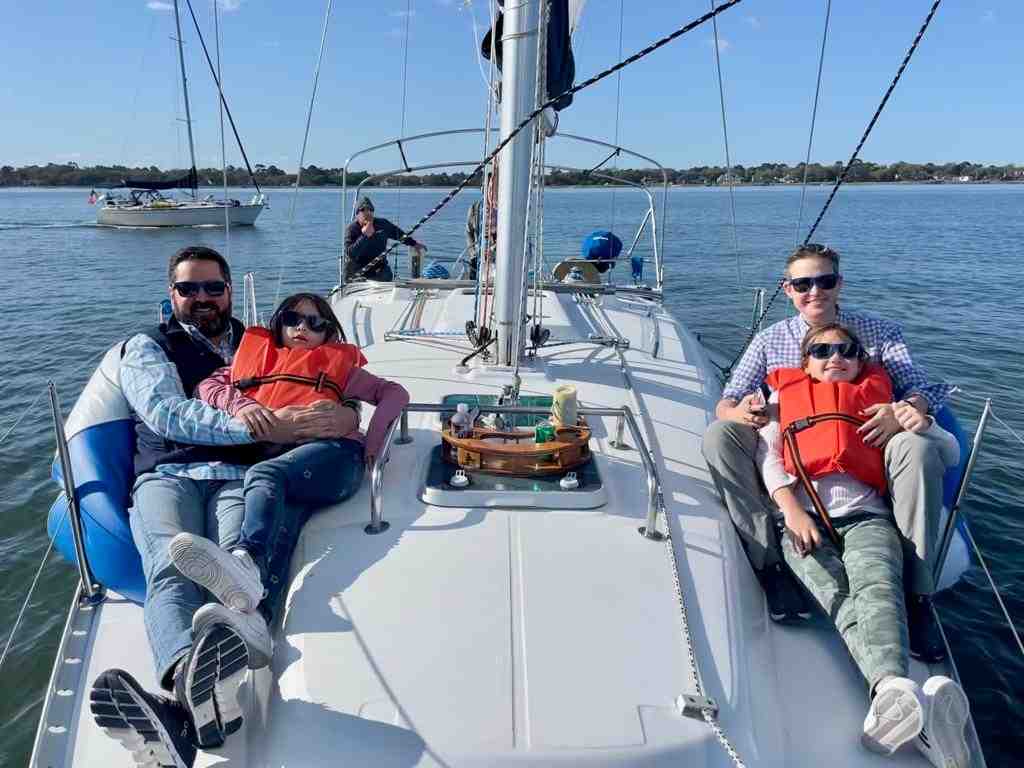
For example, if you’re an experienced sailor wanting to take a catamaran out for a week-long adventure from Charleston to explore the barrier islands, a bareboat charter allows you to handpick your own crew (or sail with just your family and friends), chart your own course, and manage all aspects of your journey. The shipowner’s role is primarily to provide a safe, well-maintained vessel at the outset, ensuring it’s in good condition and seaworthy. After that, the reins are entirely in your hands.
Key Features of a Bareboat Charter
Bareboat charters come with distinct characteristics that set them apart:
- Long-term Duration: While we can arrange shorter bareboat charters for your Charleston adventures, in the broader commercial maritime sector, bareboat charters typically span longer periods, from months to several years. This extended duration reflects the significant transfer of responsibility and control to the charterer.
- Financial Arrangements: The financial model is simple yet comprehensive for the charterer. You pay a fixed hire rate to the shipowner and then bear all other costs. This includes crew wages, fuel (bunkers), provisions, port fees, and any other operational expenses. Bareboat charters are sometimes used as a form of vessel financing, akin to a hire-purchase agreement, where the charterer might have an option to buy the vessel at the end of the charter period.
- Disponent Owner Status: As the bareboat charterer, you assume the legal responsibilities of the owner. This includes everything from ensuring regulatory compliance to managing the vessel’s daily operations. This liftd level of control and responsibility is why it’s often referred to as a “demise charter,” signifying the transfer of command.
- Legal Possession: Unlike other charter types, a bareboat charter transfers legal possession of the vessel to you. This means you have the right to operate the vessel as if it were your own, within the terms of the charter agreement, of course.
Whether you’re exploring the serene waters near Folly Beach or starting on a longer expedition, understanding these features helps you appreciate the freedom and responsibility that comes with a bareboat charter. We even offer Bareboat Catamaran Charter options for those who prefer the stability and space of a multihull.
The Time Charter: Hiring the Vessel and Its Crew
In contrast to the DIY nature of a bareboat charter, a time charter offers a more hands-off approach for the charterer while still providing significant operational control. When you enter into a time charter, the shipowner leases you a vessel that comes fully equipped with a professional crew (captain and deckhands), and sometimes even provisions. This arrangement is for a fixed period of time, which can range from a few days to several years, allowing you to use the yacht for your specific needs.
The key distinction here is that while the shipowner retains operational control over the vessel’s technical management, crewing, and maintenance, you, the charterer, gain commercial control. This means you dictate the yacht’s itinerary, destinations (within agreed geographical limits, like the beautiful Charleston harbor and surrounding waters), and what activities will be undertaken.
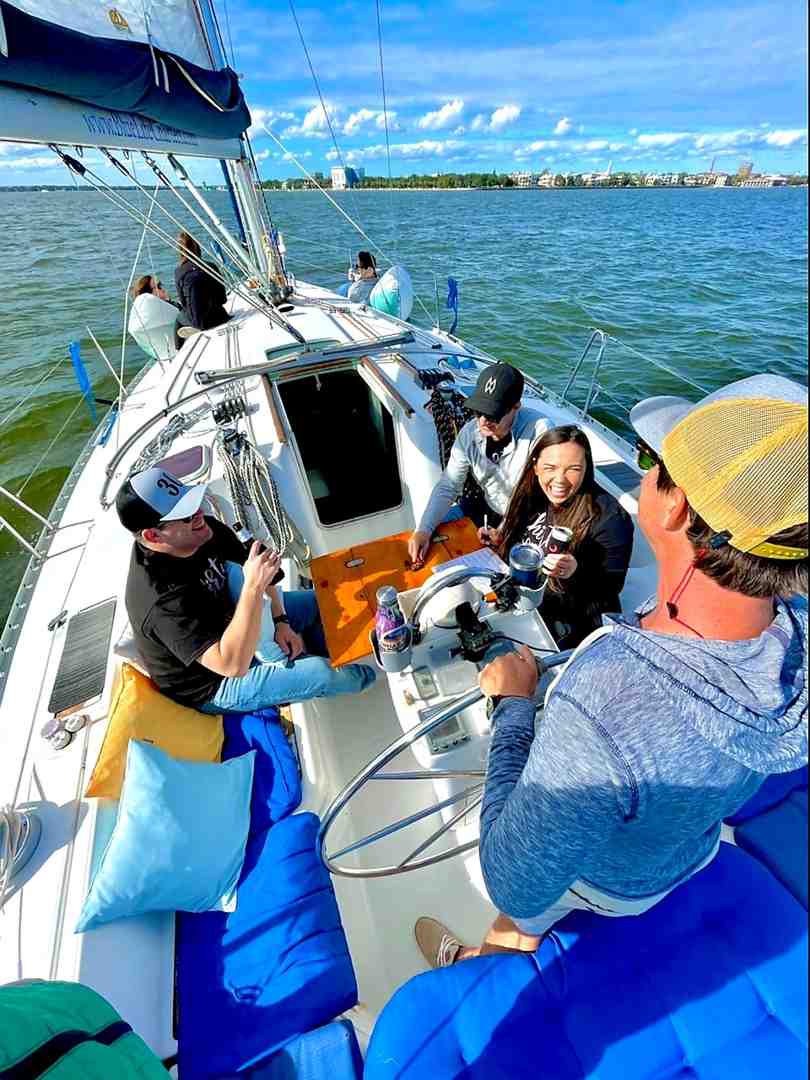
For example, if you’re planning a corporate event on the water or a luxurious sightseeing tour of Charleston with friends, a time charter is ideal. Our expert captains and crew will steer the waters, handle all the technical aspects, and cater to your needs, allowing you to relax and enjoy the experience. You simply tell the captain where you want to go and what you’d like to do, and they make it happen.
Your responsibilities as the charterer typically include covering all voyage-related expenses. This means paying for fuel costs (often referred to as bunkers), port charges (docking fees, pilotage), and any provisions or services specifically requested for your trip. The shipowner, on the other hand, is responsible for the vessel’s overall maintenance and repairs, crew wages, insurance (Hull & Machinery, Protection & Indemnity), and ensuring the yacht remains seaworthy throughout the charter period. We pride ourselves on providing exceptional Chartered Boat Hire experiences in Charleston, ensuring every detail is handled by our professional team.
Key Features of a Time Charter
Time charters are characterized by several advantages, particularly for those seeking a blend of flexibility and convenience:
- Financial Predictability: A major draw of time charters is the financial certainty they offer. You pay a fixed daily or hourly hire rate for the use of the vessel and its crew. This predictable cost structure helps with budgeting and financial planning, which is why 55% of charterers prefer time charters for their logistic planning and financial predictability.
- Fixed Daily Hire Rate: The charter fee is typically calculated on a per-day or per-hour basis, ensuring transparency and ease of understanding. This rate covers the shipowner’s costs for the vessel and crew.
- Off-Hire Periods: A crucial clause in time charters deals with “off-hire” periods. If the vessel becomes unavailable for service due to mechanical breakdown, repairs, or other issues for which the shipowner is responsible, the charterer is typically not required to pay the hire rate during that time. This provision significantly mitigates risk for the charterer.
- Logistic Planning: With the crew and vessel management taken care of, you can focus entirely on the logistics of your trip or event. Whether it’s planning the perfect Charleston harbor tour or a bespoke sailing adventure, the operational burden is lifted.
- Risk Mitigation for Charterer: The shipowner bears the primary risk for the vessel’s technical performance and maintenance. This means you aren’t responsible for unexpected repair costs or crew issues, providing peace of mind.
For those looking to enjoy the beauty of Charleston’s waterways without the complexities of full vessel management, a time charter provides an ideal solution. It allows for personalized experiences and memorable voyages, while we handle the intricate details. Find the many Advantages of Private Boat Charters for your next outing.
Bareboat Charter vs Time Charter: A Head-to-Head Comparison
Choosing between a bareboat charter vs time charter hinges on your specific needs, experience level, and desired level of involvement. It’s a decision that impacts everything from the cost of your adventure to the amount of responsibility you’ll bear. Let’s break down the key differences in a direct comparison. The division of responsibilities is crucial for effective chartering strategies in maritime operations.
| Feature | Bareboat Charter | Time Charter |
|---|---|---|
| Control | Complete operational and commercial control by charterer. | Commercial control by charterer; operational/technical control by shipowner. |
| Crew | Provided and managed by charterer. | Provided and managed by shipowner. |
| Costs | Charterer pays fixed hire + ALL operational costs (fuel, crew, maintenance, port fees, insurance). | Charterer pays fixed hire + voyage-related costs (fuel, port fees); shipowner pays crew, maintenance, insurance. |
| Maintenance | Responsibility of charterer. | Responsibility of shipowner. |
| Duration | Often longer-term (months to years), but can be shorter for recreational. | Fixed period (days to years). |
| Risk | Higher risk for charterer (all operational risks, maintenance, liability). | Lower risk for charterer (technical risks on shipowner). |
| Expertise Needed | High (certified captain, navigation, maintenance knowledge). | Low (you direct, crew handles technical aspects). |
| Legal Status | Charterer acts as “disponent owner” with legal possession. | Shipowner retains legal possession and operational command. |
Division of Responsibilities and Costs
The allocation of responsibilities and financial burden is perhaps the most significant differentiator between these two charter types.
In a bareboat charter, you truly step into the shoes of the owner. Your responsibilities are extensive:
- Crewing: You are responsible for hiring, managing, and paying the crew, or being capable of operating the vessel yourself. This includes ensuring they meet all necessary certifications for operating in Charleston waters.
- Operational Costs: All costs associated with running the vessel fall to you. This includes fuel, provisions, supplies, and port charges encountered during your journey.
- Maintenance Costs: Routine maintenance, unexpected repairs, and ensuring the vessel remains in good working order are your responsibility. This requires a keen understanding of maritime engineering or access to reliable service providers.
- Insurance: You are typically required to arrange comprehensive insurance for the vessel, covering Hull & Machinery (H&M) for physical damage and Protection & Indemnity (P&I) for third-party liabilities.
Conversely, with a time charter, the shipowner retains a significant portion of these responsibilities:
- Crew Costs: The shipowner is responsible for hiring, training, paying, and managing the professional crew. Our captains and crew are experts in navigating Charleston’s unique waterways.
- Maintenance Costs: The shipowner handles all vessel maintenance and repairs, ensuring the yacht is always in top condition and seaworthy.
- Insurance: The shipowner maintains the primary H&M and P&I insurance for the vessel and its operations.
Your primary financial outlay as a time charterer, beyond the fixed hire rate, will be for voyage-related costs such as fuel (bunkers) and port fees. Understanding How Much Does it Cost to Charter a Boat in Charleston? is essential, and these costs will vary significantly based on your chosen charter type.
Operational Control and Risk Allocation
The level of operational control directly correlates with the allocation of risk.
In a bareboat charter, the charterer assumes a high degree of operational control. You decide everything: the route, speed, cargo (if applicable), and all day-to-day operational decisions. This complete control translates to a higher allocation of risk transfer to you. Any issues arising from navigation, crew actions, or operational mishaps typically become your liability. For example, if your chosen crew makes a navigational error near Folly Beach, the responsibility would likely fall to you as the charterer. This extensive control is a defining characteristic of maritime operations under a bareboat agreement.
For instance, the research indicates that if a master (hired by the charterer) discharges cargo without original bills of lading in a bareboat charter, the charterer is liable. This highlights the profound transfer of responsibility.
In a time charter, your operational control is primarily commercial. You direct the vessel’s movements and schedule, but the shipowner’s crew maintains command over the actual navigation and technical operation of the yacht. The shipowner’s role is to ensure the vessel is well-maintained and efficiently operated by a competent crew. This arrangement significantly reduces your operational risk, as the shipowner remains liable for the vessel’s seaworthiness and the professional conduct of their crew. If a mechanical issue causes a delay during your Charleston harbor tour, the shipowner typically bears the financial impact (e.g., off-hire periods).
Legal and Financial Implications of Bareboat Charter vs Time Charter
Both types of charters are governed by a charterparty agreement, a legally binding maritime contract. The legal and liability distinctions are crucial. A “Charterparty” is a maritime contract between a shipowner and a charterer for the hire of a ship, and understanding its nuances is paramount.
In a bareboat charter, because you assume the role of the disponent owner, your legal distinctions and liability differences are substantial. You are responsible for ensuring compliance with all maritime laws and regulations, including those governing vessel operation in Charleston’s coastal waters. Liability for accidents, environmental damage, or other incidents typically rests with you, the charterer. The financial outlay is high due to comprehensive operational costs and insurance premiums, although the bareboat hire rates might appear lower upfront.
For a time charter, the legal relationship is one of service rather than possession. The shipowner maintains legal ownership and responsibility for the vessel itself. Your liability is generally limited to the commercial aspects of the charter, such as fulfilling payment obligations and not misdirecting the vessel into unsafe areas. The financial outlay is more predictable, consisting of the fixed daily hire rates and specific voyage costs. The shipowner’s strong focus on Yacht Charter Management ensures that all legal and compliance aspects related to the vessel and crew are carefully handled, providing you with a worry-free experience.
Frequently Asked Questions about Charter Types
When planning your perfect maritime adventure in Charleston, many questions arise about the best charter choice. Here, we address some common inquiries to help you steer the options between a bareboat charter vs time charter.
What is the fundamental difference in vessel control?
The fundamental difference lies in the nature of control: possession versus service.
With a bareboat charter, you, the charterer, take physical possession and full operational command of the vessel. You are responsible for all aspects of running the yacht, from navigation and safety to hiring and managing your own captain and crew (if you don’t pilot it yourself). It’s akin to owning the boat for the duration of the charter – you make all the operational decisions.
In a time charter, the shipowner provides the vessel along with a professional captain and crew. While you, the charterer, have commercial control – meaning you dictate the itinerary, destinations, and activities – the actual operational decisions, navigation, and technical management remain with the shipowner’s crew. You are essentially hiring a fully serviced yacht with a professional team to execute your desired plan.
Who is responsible for insurance in each charter type?
Insurance responsibilities also differ significantly:
-
Bareboat Charterer Insurance: In a bareboat charter, the responsibility for insuring the vessel typically falls to the charterer. This usually involves securing two main types of marine insurance:
- Hull & Machinery (H&M): This covers physical damage to the vessel itself, similar to comprehensive car insurance.
- Protection & Indemnity (P&I): This covers third-party liabilities, such as injury to passengers or crew, environmental damage (e.g., oil spills), or damage to other vessels or property. The charterer must ensure adequate coverage for all potential risks associated with operating the vessel in areas like Charleston Harbor and beyond.
-
Time Charter Shipowner Insurance: In a time charter, the shipowner retains responsibility for the vessel’s insurance. They maintain comprehensive H&M and P&I coverage for the yacht, its crew, and its operations. This means you, as the charterer, are generally relieved of this complex and costly responsibility, further reducing your risk and administrative burden.
Which charter is better for a private vacation in Charleston?
For a private vacation in Charleston, the “better” charter type depends entirely on your experience, preferences, and what kind of holiday you envision:
- Bareboat for Experienced Sailors: If you are a seasoned sailor with the appropriate certifications, experience, and a desire for complete independence, a bareboat charter can be an incredibly rewarding experience. You get to be the captain of your own adventure, charting your course through Charleston’s historic waters, anchoring near Folly Beach, and exploring hidden coves at your leisure. It offers unparalleled freedom and a true sense of command.
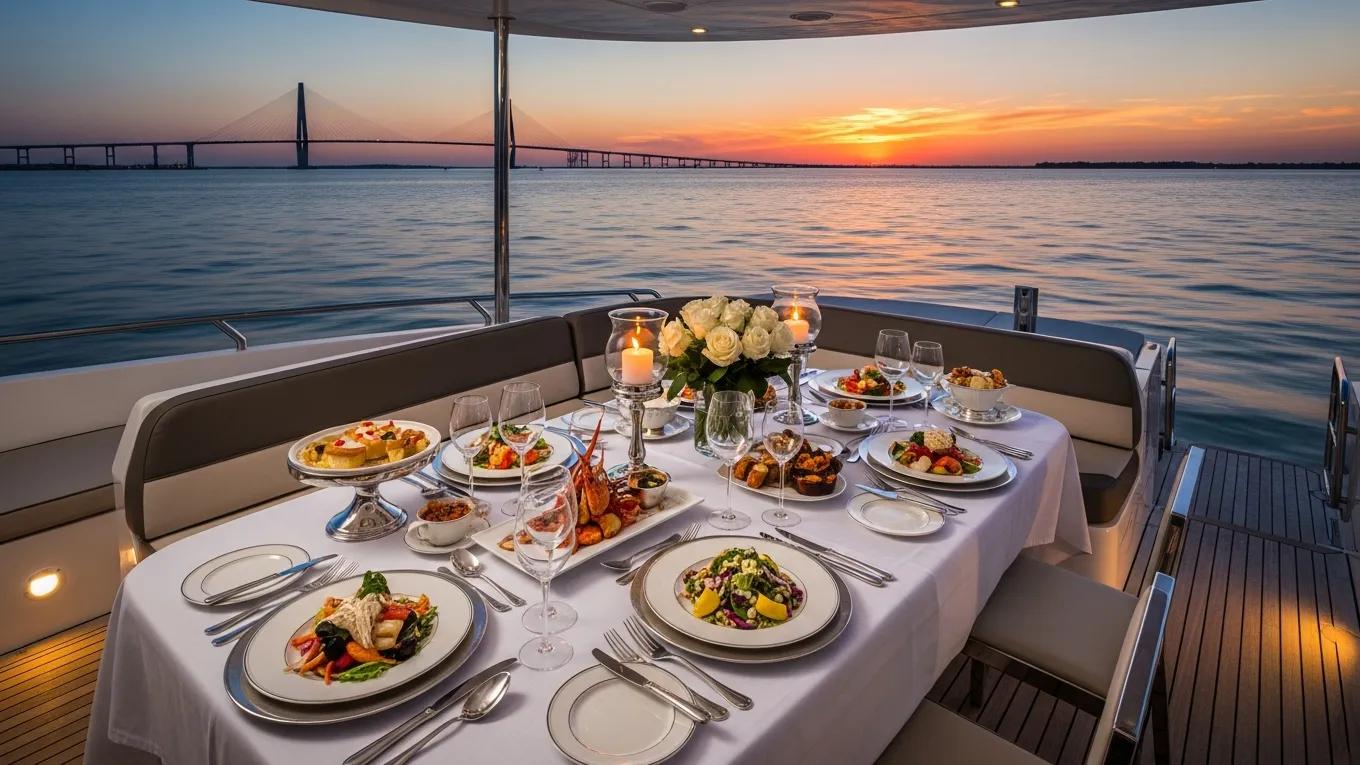
- Time Charter for Relaxation and Luxury: For most private luxury vacations, especially if you’re looking to relax and be pampered, a time charter (or a fully crewed charter, which is a type of time charter) is generally the preferred choice. Our professional captains and crew will handle all the navigation, docking, and technical aspects of the yacht, allowing you to fully immerse yourself in the beauty of the Lowcountry. You simply enjoy the scenery, the company, and the impeccable service. This option offers the ultimate in convenience and an all-inclusive service, making it perfect for those who want to avoid any operational responsibilities. We specialize in providing exceptional Private Sailboat Charter Charleston SC experiences, where our crew ensures your journey is seamless and unforgettable.
If your goal is pure relaxation, exquisite service, and unforgettable memories without a single worry about operating the vessel, a time charter with a professional crew is your best bet for a Charleston vacation.
Conclusion: Choosing the Right Charter for Your Needs
The choice between a bareboat charter vs time charter is a pivotal decision that shapes your entire maritime experience. As we’ve explored, these two fundamental types of charter party agreements offer distinctly different levels of control, responsibility, and risk.
It boils down to control vs. convenience, and risk vs. predictability. A bareboat charter grants you absolute control, placing you in the captain’s seat with full responsibility for crewing, maintenance, and all operational aspects. It’s an empowering choice for experienced mariners seeking complete autonomy and a hands-on adventure. However, this freedom comes with a higher degree of financial and operational risk.
Conversely, a time charter offers the convenience of a professionally crewed vessel, where the shipowner handles all technical operations, maintenance, and crew management. You retain commercial control, directing the itinerary and activities, allowing for a more relaxed and predictable experience. This option mitigates much of the operational risk for the charterer, making it ideal for luxury vacations, corporate events, or those who prefer to leave the complexities of vessel management to the experts. The industry trend of 55% of charterers preferring time charters for their logistic planning and financial predictability underscores this balance of control and reduced responsibility.
Whether you’re dreaming of navigating the historic waters of Charleston harbor yourself, or envisioning a luxurious cruise where every detail is managed for you, understanding these distinctions is key to making an informed decision. At Blue Life Charters, we are experts in crafting unforgettable maritime experiences in Charleston, SC. We understand that every client has unique needs and preferences, and we are here to guide you through the options.
Ready to start on your next adventure? Let us help you plan your perfect voyage. Your Private Yacht Awaits: How to Plan the Ultimate Charleston Harbor Tour with our expert team.
Explore our Bareboat Charter options to take command of your next adventure.