

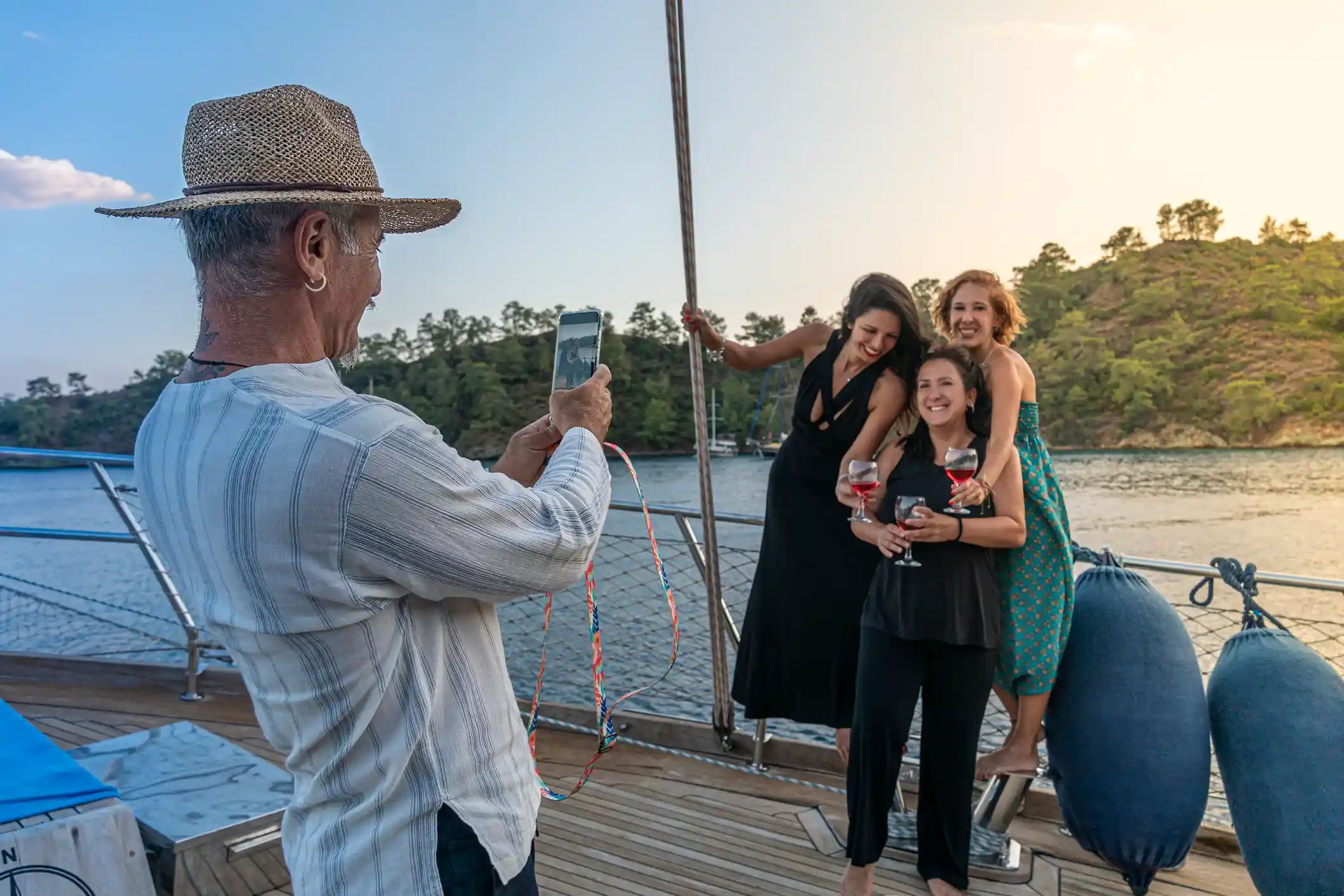
Charleston is built for a camera. But most photographers who come here work the same handful of land-based angles — Rainbow Row at golden hour, the Battery from White Point Gardens, the church steeples from East Bay Street. The problem is everyone else is there too.
Get on the water, and that changes completely. You get the skyline, the Ravenel Bridge, the antebellum waterfront, the Lowcountry marsh, and the open harbor — without the pedestrian foot traffic, the parked cars, or the selfie crowd edging into the frame. This guide covers the seven best spots for a boat photoshoot in Charleston and what makes each one work photographically.
Why Charleston Harbor Photographs Unlike Any Other City
Few American harbors put this much visual history inside one frame. Standing on the deck of a sailing yacht mid-harbor, you can see Fort Sumter, the Ravenel Bridge, the steeples of St. Philip’s and St. Michael’s, and the antebellum homes lining the Battery — simultaneously. The horizon is open. The water is calm enough most days for clean reflections. And unlike Boston or Baltimore, there is almost no commercial shipping traffic running through the working harbor in the areas you will actually be shooting.
Light here behaves well. In late spring and early summer, golden hour starts around 7:45 PM and the harbor catches a warm amber for 20 to 25 minutes that outdoor portrait photographers describe as close to studio-quality. Fall shifts that light earlier and redder. If you are booking for engagement or editorial work and have flexibility, late April through early June is the benchmark window.
The 7 Best Locations for a Boat Photoshoot in Charleston
1. Fort Sumter Approach
Positioning a sailing yacht at anchor or underway south of Fort Sumter gives you a clean nautical composition with the historic fortification behind and open ocean extending to the frame edges. No urban background, no power lines, no foot traffic. This is the shot for sailboat silhouettes, open-water compositions, and anything that needs to feel removed from the city. The contrast between the white sails of a 36-foot yacht and the brick walls of Fort Sumter is one of those combinations that works at almost any angle.
2. Charleston Harbor with the Ravenel Bridge
The Arthur Ravenel Jr. Bridge is one of the most architecturally distinctive cable-stayed spans on the East Coast. From the water, positioned in the main harbor channel at golden hour, the bridge towers catch the last direct light while the Charleston skyline behind holds enough detail to be recognizable without dominating the frame. The marina masts in the foreground add layering without visual clutter. This is the most versatile of the harbor compositions — it works for couples, corporate headshots, vessel photography, and editorial alike.
3. The Battery Approach
Coming at the Battery from the water — anchoring or drifting 100 yards offshore of White Point Gardens — gives you the antebellum mansions of South Battery, the sea-wall promenade, and the cannons of White Point Gardens without the tourists walking through your frame. These are some of the most photographed homes in the South. From a private yacht, you get the architecture in stillness, in the early morning light, before the Harbor is active.
4. Morris Island and the Morris Island Lighthouse
The decommissioned Morris Island Lighthouse stands offshore in shallow water, surrounded entirely by ocean — no land bridge, no road access, no development on any horizon. Reachable only by boat. For photographers, it offers a vertical architectural element against open sky that no other Charleston location replicates. Arrive at sunrise and the lighthouse faces east into the first direct light. Silhouettes, backlit portraits, long-exposure sky work — this is the location for photographs that need to feel genuinely remote.
5. The Lowcountry Marsh — Elliot Cut
If harbor views are one Charleston visual vocabulary, the salt marsh is the other. The Elliot Cut connects the Ashley River to the ICW through dense spartina grass flats — the defining landscape of the South Carolina coast. Early morning light on the marsh produces a golden-green quality that does not photograph the same anywhere else on the East Coast. The scale is intimate. The sound is quiet. For couples who want something less monumental and more personal than the harbor, the marsh is the alternative.
6. The ICW Through James Island
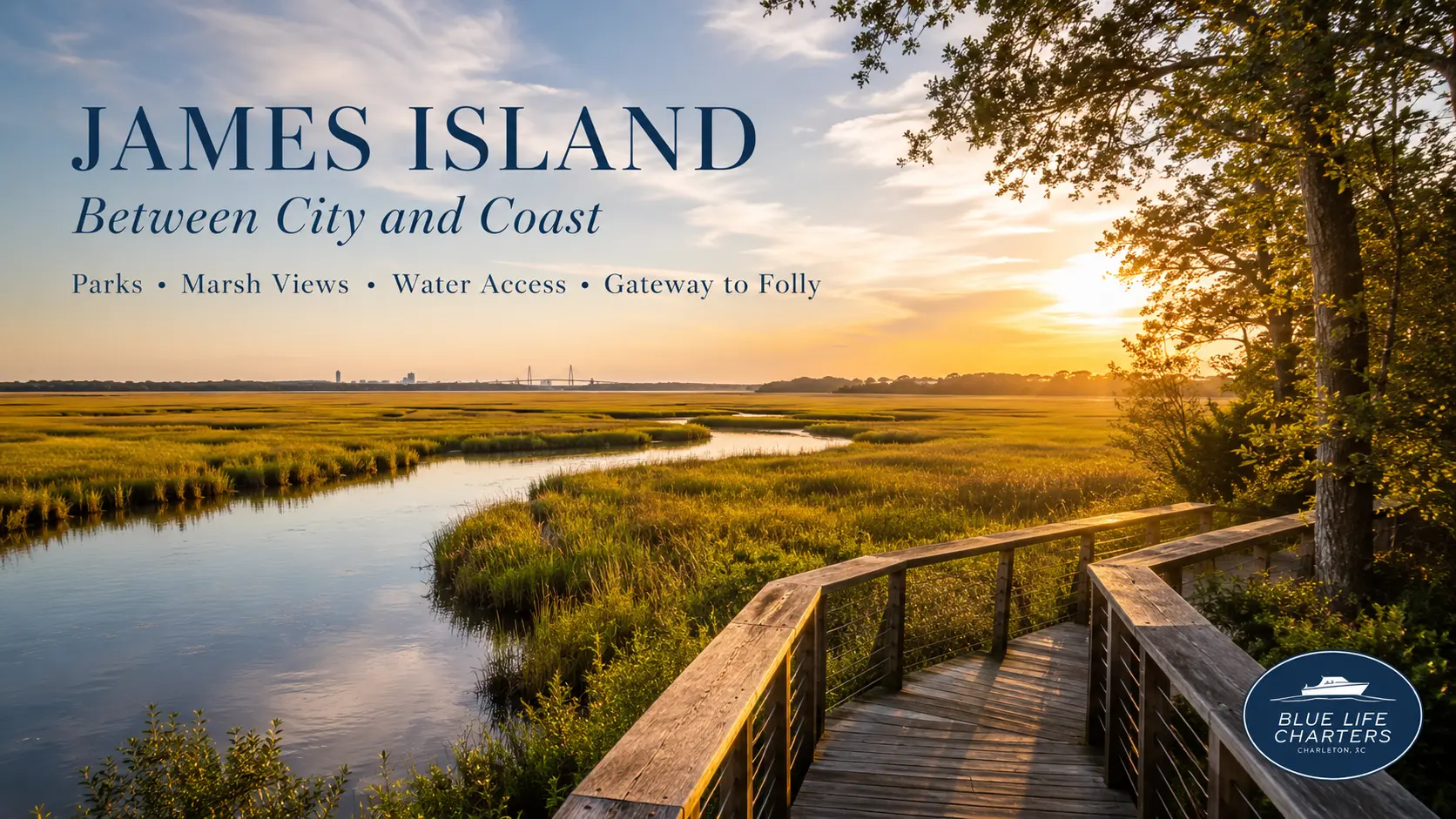
The Intracoastal Waterway through James Island offers protected, calm water flanked by wooded shores and occasional dock houses. No current to fight, no ferry wakes, flat water for clean reflections. Overcast days — which photographers often prefer for even, soft light without harsh shadows — work particularly well here. For portrait work that needs the water present without the drama of the open harbor, this passage delivers.
7. Sullivan’s Island Tidal Creeks
The tidal creeks north of Sullivan’s Island produce a completely different mood: shallower water, oyster-covered pluff mud banks, great egrets wading in the spartina. For editorial or fashion work that wants a wilderness quality without leaving the Charleston metro, this is the location. Best in the two hours around high tide, when the water level covers the exposed mud and the creek banks are green and full.
What Type of Vessel Works Best for On-Water Photoshoots
The boat matters as much as the location. A sailing yacht with white sails raised creates a completely different visual narrative than a motor vessel. For portrait, engagement, and editorial work, sailboats carry a timelessness that holds well across every season and trend. The rigging, teak decks, and classic hull lines photograph cleanly at every angle.
Blue Life Charters operates two sailing yachts — Llibertat (36-foot) and Xocolata (32-foot) — as well as the motor yacht Tramuntana (30-foot). All charters are fully private for parties of up to six guests, which means your photographer has the deck to themselves. No strangers in the background, no timing around shared passenger schedules. Book a Charleston Harbor Tour to see the full fleet and availability.
Best Time of Day for a Boat Photoshoot in Charleston
Golden hour — the hour before sunset — is the standard recommendation. The harbor catches the sun from the west-northwest, which means positioning facing southeast at golden hour puts warm, directional light on faces without squinting. For the Ravenel Bridge and Battery compositions, this is the right window. A Charleston Sunset Cruise puts you in that light at the right moment.
Sunrise is the underused option. Morris Island Lighthouse faces east. The Sullivan’s Island creek mouths face east. For backlit silhouettes and dramatic sky gradients, a 6 AM departure puts you in position before tour traffic begins. The harbor at 6:30 AM belongs to you.
Booking a Private Charter for Your Photoshoot in Charleston
Blue Life Charters departs from 33 Lockwood Drive in downtown Charleston. Private charters accommodate photographers traveling with clients and solo couple sessions alike. Last-minute bookings are accepted if an open slot appears on the same day — call (843) 743-4915 to confirm availability.
Frequently Asked Questions
Can I book a sailboat specifically for an engagement photoshoot in Charleston?
Yes. Blue Life Charters’ sailing yachts Llibertat and Xocolata are available for private charters that photographers and couples book for engagement sessions. All charters are private — your group only, no shared passengers.
What time of year is best for a boat photoshoot in Charleston?
Late April through early June and September through November offer the best combination of light quality and comfortable temperatures. Summer extends golden hour later into the evening but adds significant heat and humidity. Spring and fall are the windows most photographers target.
Do I need to hire my own photographer?
Yes. Blue Life Charters provides the vessel, captain, and crew. Your photographer travels with you as part of your private charter group. The captain can position the vessel for specific backgrounds and lighting angles on request.
Can the boat anchor near Morris Island Lighthouse for photos?
The area around Morris Island Lighthouse is shallow water. An experienced captain can anchor nearby for photography. Discuss the route and specific locations when booking so the crew can plan the departure time and course accordingly.



Leave A Comment
You must be logged in to post a comment.