Why Bareboat Charter Insurance Protects Your Investment
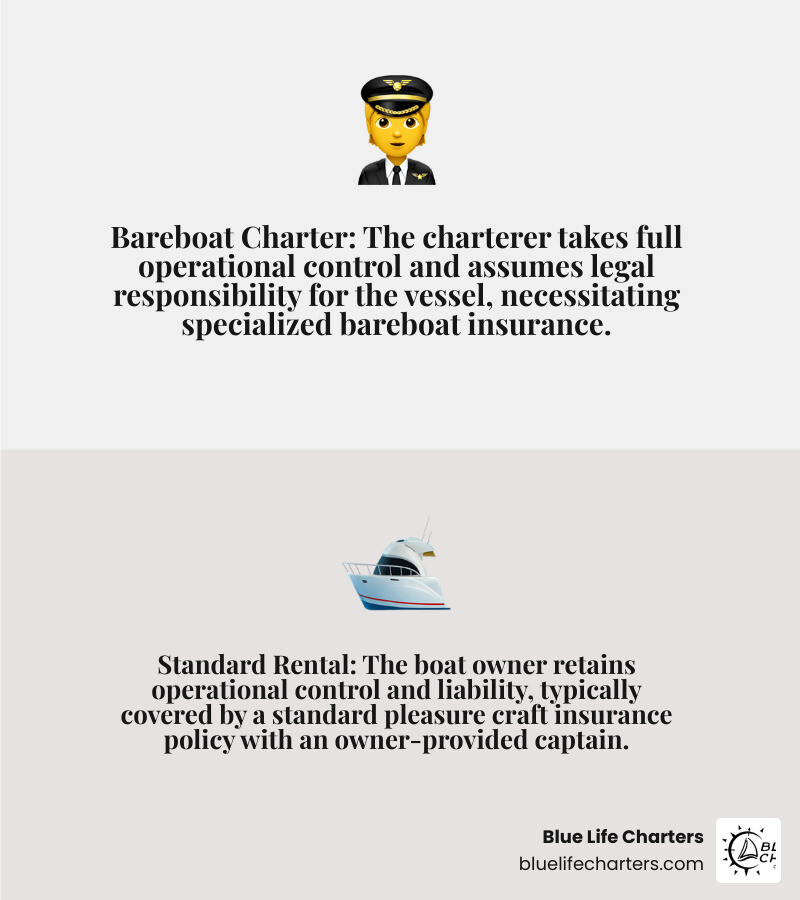
Bareboat charter insurance is a specialized policy that protects owners who lease their vessels without a captain or crew. Unlike standard rentals, a bareboat charter transfers complete operational responsibility—and significant liability—to the charterer.
Quick Answer: What You Need to Know
- Definition: Insurance for vessels chartered without crew, where the charterer assumes full operational control
- Why It’s Different: Standard pleasure craft policies exclude charter operations entirely
- Who Needs It: Boat owners offering bareboat charters and charterers assuming vessel responsibility
- What It Covers: Hull damage, liability to third parties, passenger injury, and pollution incidents
- Key Requirement: Stricter underwriting than standard policies due to liability shift
- Cost Factor: More expensive than pleasure craft insurance due to increased risk exposure
Many boat owners find too late that their standard insurance excludes charter activities. As one industry source notes, “boat renters may not realize that their liability exposure is not automatically covered by the boat owners’ insurance.” This coverage gap can turn a profitable venture into a financial disaster after an accident.
The stakes are high. Operating without proper insurance can result in civil penalties up to $5,996 for lacking valid documentation when carrying passengers for hire. Beyond fines, owners face liability for passenger injuries, environmental damage, and hull loss—risks that can reach millions of dollars.
For those considering bareboat charters in Charleston, South Carolina, proper insurance isn’t just about compliance. It’s about protecting your vessel, business, and peace of mind.
Understanding Bareboat Charter Insurance: Coverage and Importance
Bareboat charter insurance is a critical safeguard for owners who charter their vessels. It protects your financial asset—the yacht—and shields you from the substantial liabilities that arise when putting your boat in someone else’s hands.
The shift of liability to the charterer makes this insurance indispensable. In a bareboat charter, the charterer assumes full operational control, including hiring the captain and crew. If something goes wrong, the primary legal and financial burden falls on them. However, the owner’s investment remains at risk and they can still be implicated in legal proceedings. Adequate bareboat charter insurance provides a robust layer of protection, ensuring unforeseen incidents don’t turn a charter business into a financial nightmare.
What Does a Typical Policy Cover?
A comprehensive bareboat charter insurance policy addresses the unique risks of leasing a vessel without a professional crew, going far beyond standard pleasure craft insurance. Here’s what a robust policy covers:
- Hull & Machinery (H&M) Insurance: Covers physical damage to the boat, its engines, and equipment from perils like collision, grounding, fire, and heavy weather. This is paramount for protecting high-value yachts in Charleston.
- Protection and Indemnity (P&I) Insurance: This liability component covers third-party claims, including bodily injury or death to passengers and others, plus damage to other vessels or property. It is essential for busy waterways like Charleston and Folly Beach.
- Passenger Injury Liability: Specifically covers medical expenses and legal costs from injuries to passengers. This is critical, as boat renters may not realize their liability exposure is not automatically covered by the boat owners’ insurance.
- Pollution Liability: Covers cleanup costs and fines related to environmental damage, such as oil spills. This is non-negotiable for operating in sensitive coastal ecosystems.
- Medical Payments: Provides for immediate medical treatment for on-board injuries, regardless of fault.
- Personal Effects: May offer limited coverage for the personal belongings of the charterer and their guests.
We strive to ensure our vessels are thoroughly covered. For more detail on the types of protection included, you can explore More on charter insurance coverage.
Common Exclusions and Limitations
While comprehensive, it’s crucial to understand what bareboat charter insurance typically doesn’t cover:
- Wear and Tear: Damage from normal aging, corrosion, or poor maintenance is excluded. Insurance is for unforeseen accidents, not routine upkeep.
- Intentional Damage or Gross Negligence: Policies won’t cover damage caused intentionally or through reckless disregard for safety.
- Unapproved Captains or Crew: If the vessel is operated by an unauthorized person or a captain who doesn’t meet specified qualifications, coverage may be voided.
- Geographic Cruising Limits: Operating outside the policy’s defined cruising area (e.g., coastal waters of Charleston) will void coverage.
- Racing Without Endorsement: Participating in races requires a specific endorsement, as the risks are much higher.
- Commercial Use Beyond the Charter Agreement: Using the vessel for unapproved purposes (e.g., illegal transport) will invalidate the policy.
- Personal Watercraft (PWC): Many policies exclude coverage for PWCs like jet skis. They require their own specialized insurance.
Understanding these limitations is as important as knowing what is covered for responsible operation.
Bareboat vs. Other Policies: Key Distinctions
Marine insurance can be complex, but understanding policy differences is crucial for chartering. A common mistake is assuming a standard boat policy covers charter operations—it does not.

Bareboat Charter Insurance vs. Standard Pleasure Craft Insurance
The most critical distinction for a boat owner is between bareboat charter insurance and standard pleasure craft insurance. Standard policies are for recreational use only and explicitly exclude commercial activities like chartering.
Here’s a breakdown of the key differences:
| Feature | Standard Pleasure Craft Insurance | Bareboat Charter Insurance |
|---|---|---|
| Intended Use | Recreational use by the owner or non-paying guests. | Commercial use for chartering without a professional crew, where the charterer assumes operational control. |
| Liability Limits | Covers owner’s liability during personal use. | Higher liability limits are required to cover significant third-party risks, including passenger injury and pollution, stemming from the charterer’s operations. |
| Passenger Coverage | Covers non-paying guests with specific limitations. | Explicitly covers passengers for hire, acknowledging the increased risk and regulatory requirements. |
| Regulatory Compliance | Focuses on recreational boating regulations. | Must comply with commercial maritime regulations, including US Coast Guard requirements for passenger vessels. |
| Cost | Lower premiums due to lower perceived risk. | More expensive due to the heightened risk of commercial operations, transfer of control, and increased liability exposure. |
This shift from personal to commercial use fundamentally changes insurance needs. We recommend owners review General information on boat insurance to clarify these points.
Charterer Responsibility: Bareboat vs. Crewed Charters
The type of charter—bareboat or crewed—impacts operational control, legal responsibility, and insurance requirements.
In a bareboat charter, the owner leases the vessel to the charterer, who assumes full operational control. The charterer is responsible for hiring their own captain and crew or operating the vessel themselves. This transfer of control means the charterer takes on primary legal responsibility during the charter. The bareboat charter insurance must account for this liability shift, protecting the owner while the charterer is in command.
Conversely, in a crewed charter, the owner provides the captain and crew, retaining operational control and primary legal responsibility. The charterer is a guest. While the charterer still has a duty of care, the insurance focuses on the owner’s commercial liability for their crewed operation.
This distinction is vital for the charterer. In a bareboat scenario, your liability is substantial. As noted, “boat renters may not realize that their liability exposure is not automatically covered by the boat owners’ insurance.” This makes it imperative for bareboat charterers to consider their own liability coverage, such as a specialized charterer’s policy or travel insurance that covers the security deposit.
To understand how these dynamics play out, Learn about private boat charters.
Navigating Legal Requirements and Costs
Operating a bareboat charter in the United States requires understanding federal regulations and their intersection with insurance. The US Coast Guard (USCG) defines operational parameters that directly influence bareboat charter insurance needs.
USCG Regulations and Their Impact on Insurance
USCG vessel classifications, based on passenger capacity and use, directly impact insurance requirements.
- Uninspected Passenger Vessels (UPVs): These vessels carry six or fewer passengers for hire. The captain must hold a valid U.S. Coast Guard (USCG)-issued Merchant Mariner Credential (MMC) and be in a drug testing program. The vessel must have appropriate safety gear. Insurance for UPVs must cover the commercial aspect of carrying passengers.
- The 6-Passenger Rule: This is a critical threshold. A vessel carrying more than six passengers for hire requires a Certificate of Inspection (COI).
- Certificate of Inspection (COI): Vessels carrying more than six paying passengers are Small Passenger Vessels and must have a COI. This involves rigorous inspections of the vessel’s structure, safety equipment, and stability, which increases the regulatory burden and insurance underwriting requirements.
- Penalties for Non-Compliance: The USCG enforces these rules strictly. Fines can be up to $5,996 for lacking a valid COI when required. Violating a Captain of the Port Order can lead to civil penalties of up to $117,608 per day. These penalties highlight the need for compliance and correct bareboat charter insurance.
- Captain Credentials: Bareboat charterers must hire a captain with the necessary USCG credentials. The owner’s insurance policy will often stipulate minimum requirements for the charterer’s chosen captain.
Understanding USCG safety equipment requirements is key to mitigating risk and can influence insurance premiums. For a compliant experience, Explore our Charleston yacht charters.
What Factors Influence Your Insurance Premium?
The cost of bareboat charter insurance is not one-size-fits-all. Premiums are influenced by many factors reflecting the increased risk of commercial operations.
- Vessel Value and Type: Higher-value or specialized yachts command higher premiums due to greater potential loss. The vessel type (sail vs. power, monohull vs. multihull) also affects risk assessment.
- Cruising Area: Where the vessel operates impacts risk. The protected waters of Charleston Harbor may have different premiums than the open Atlantic. Insurers assess locations for weather patterns and navigational hazards.
- Passenger Capacity: The number of passengers, especially in relation to the 6-passenger rule, directly affects liability exposure and premiums.
- Captain’s Experience: The insurance policy may require a minimum experience level for the charterer’s chosen captain, as a more experienced captain lowers risk.
- Claims History: A history of claims will likely lead to higher premiums. A clean record helps keep costs down.
- Deductible Amount: Choosing a higher deductible can reduce your premium, but you’ll pay more out-of-pocket for a claim.
- Safety and Technology: Vessels with Advanced safety technology and high maintenance standards may receive better rates.
Understanding these factors helps you make informed decisions. To get a sense of overall charter expenses, see How much does a charter cost?.
Securing the Right Policy for Your Vessel
Securing the right bareboat charter insurance is a strategic move to protect your asset and business. It requires a proactive approach, often with guidance from a marine insurance specialist.
Steps to Obtain Adequate Bareboat Charter Insurance
For owners venturing into bareboat chartering, securing the right insurance is a detailed process:
- Assess Your Needs: Clearly define your charter operation. Know your vessel type, cruising areas around Charleston, passenger capacity, and desired liability protection before approaching insurers.
- Compare Quotes from Marine Insurers: Obtain proposals from several reputable marine insurance carriers specializing in charter policies. Offerings can vary significantly in coverage and price.
- Consult a Specialist Advisor: Work with an insurance advisor who has expertise in bareboat charter insurance. They can help you steer complex policy language and identify coverage gaps.
- Review Policy Exclusions Carefully: Take time to understand what your policy doesn’t cover. Ask your advisor to clarify anything that is unclear.
- Gather Necessary Documentation: Be prepared to provide key documents to your insurer:
- Vessel Survey: A recent professional survey detailing your yacht’s condition and value.
- Captain’s Credentials: Information on the minimum acceptable credentials for any captain operating your vessel.
- Charter Agreement Sample: A copy of your standard bareboat charter agreement.
- Cruising Plan: An outline of your vessel’s typical operational areas.
For owners considering yacht charter as a business, understanding these steps is crucial. We also offer comprehensive Information on yacht management to help with broader operations.
Specialized Coverage for Unique Operations
Some specialized charters require particular insurance attention:
- Fishing Charters: May need additional coverage for fishing equipment and specific endorsements for risks associated with fishing activities.
- High-Performance Vessels: Yachts designed for speed may face higher premiums and require charterers with specific skills.
- International Voyages: If your charter extends to international waters, your policy must have the necessary geographical extensions. Some policies may exclude certain regions.
- Regatta Participation: If charterers might participate in races, you’ll need a specific racing endorsement, which often comes with a higher deductible.
- Charterer’s Liability: Charterers benefit from their own liability coverage. This can include protection for their personal liability and, critically, Deposit insurance for charterers. This insurance protects the security deposit from being forfeited due to accidental damage, a significant relief for charterers as deposits can be thousands of dollars.
We can assist you in understanding the specific insurance needs for each vessel in our diverse fleet. View our fleet of boats to see the range of vessels we operate.
Frequently Asked Questions about Bareboat Charter Insurance
We understand that bareboat charter insurance can raise many questions. Here are some of the most common inquiries we receive.
What is the main difference between bareboat and crewed charter insurance?
The key difference is liability. In a bareboat charter, the charterer assumes full operational control and legal responsibility. The insurance must cover the owner despite this transfer of control, requiring stricter underwriting. For a crewed charter, the owner retains control and liability, so their insurance covers their own commercial operation and crew actions. The shift in responsibility in a bareboat charter demands a more specialized insurance policy.
As a charterer, am I covered by the boat owner’s insurance?
Not completely. The owner’s bareboat charter insurance covers the vessel and major liabilities, but the charterer assumes significant personal risk. You are typically responsible for the policy deductible if the boat is damaged, which comes from your security deposit. As the quote says, “boat renters may not realize that their liability exposure is not automatically covered by the boat owners’ insurance.” It is highly recommended that charterers get their own liability or travel insurance that includes security deposit coverage to protect against out-of-pocket expenses.
Can I add bareboat charter coverage to my existing pleasure craft policy?
Almost never. Standard pleasure craft policies explicitly exclude commercial activities like chartering for hire. Using such a policy for a charter would likely void your coverage. You must work with a marine insurance specialist to replace your policy with a proper bareboat charter insurance policy that includes charter endorsements. Being transparent with your insurer about your intent to charter is essential to ensure you are properly covered for both personal and commercial use. Specialized insurers can offer policies that cover both uses, removing the charter exclusion.
Conclusion: Sail with Confidence
Bareboat charter insurance is a fundamental pillar of responsible yacht ownership and successful chartering. It protects your asset from physical damage and shields you from catastrophic liability, ensuring smooth sailing even when the unexpected occurs.
Understanding the critical distinctions between pleasure craft and charter policies, navigating USCG regulations, and recognizing the shift in responsibility to the charterer are all vital steps. By securing adequate coverage, you safeguard your financial investment, ensure legal compliance, and gain invaluable peace of mind.
At Blue Life Charters, our commitment to exceptional experiences begins with safety and security. Our vessels are properly insured, and we encourage all partners and charterers to understand their insurance needs. With the right bareboat charter insurance in place, you can focus on creating unforgettable memories on the beautiful waters of Charleston and Folly Beach.
Ready to start on your next adventure with confidence? Plan your perfect bareboat charter adventure with us and let us help you steer the waters, both literally and figuratively.